Molding Sand
I use regular mason's sand (the finer the better) mixed with powdered bentonite clay. I allow the sand to dry out before mixing. Using a 16 oz coffee can, I mix, through a screen mesh, approximately 7 parts sand to 1 part clay (20 cans of sand to 3 cans of clay which makes about a 5 gallon bucket of mix). Do this in a well ventilated place or with a respirator since the powdered bentonite does not sit well in the lungs. I obtained my bentonite clay from a local well digger where it is used for temporary casings. Make sure you get the powdered kind. You can mix in a cup of wheat flour and a cup of wood flour (get it from a floor refinisher) as a secret ingredient but I have found they are not really needed. "Temper" the mixture by slowly mixing in water (I use a spray bottle) until the mix starts to hold a "sausage" shape when squeezed in the hand. It should feel damp but not wet. This should probably take no more than a quart of water. The "sausage" should break in half cleanly.
After a lot of use the mix may have to be recharged with bentonite due to the parting dust used and since the heat of the melt tends to burn out the clay . This will be noted when the sausage will not form or break cleanly. After about three rechargings, make a brand new batch of mix.
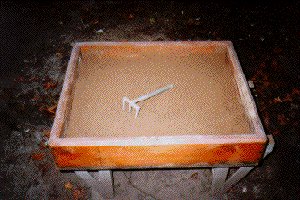
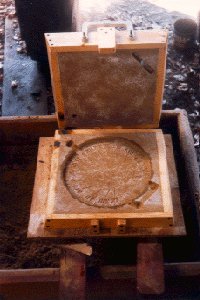
On the left is my molding table with sand box and molding sand. The small rake (cast from aluminum of course) is used for mixing and tempering the sand. On the right is a an open flask on the table with its pattern removed and ready for closing.
Other Foundry Links